
Choosing reliable China Best Granular Flower Fertilizer Wholesale Suppliers requires more than comparing prices. Buyers should examine product quality, formulation accuracy, factory experience, and delivery performance. Granular Flower Fertilizer can support flowering plants when its nutrients match crop needs, soil conditions, and application timing.
Experienced suppliers usually provide clear NPK ratios, traceable raw materials, and practical usage guidance. Ask for recent laboratory reports, production certificates, packaging details, and batch identification. A dependable factory should explain how granules are dried, screened, and protected from moisture. This matters when bags travel through humid ports or remain in a warehouse for several weeks.
Details reveal reliability.
Product consistency deserves close attention. Uneven granules may create irregular feeding across flower beds, especially after mechanical spreading. Buyers can request samples and inspect particle size, color, odor, dust levels, and dissolution behavior. Field trials also offer useful evidence, although one trial cannot represent every climate or flower variety.
No supplier is perfect. Even a capable manufacturer may experience seasonal delays, packaging mistakes, or communication gaps. That is why responsible sourcing includes written specifications, quality inspection plans, and realistic lead times. Suppliers with export experience should understand labeling requirements and provide documents suitable for lawful international trade.
The strongest wholesale partnerships combine technical knowledge with responsive service. They help buyers select formulas for roses, chrysanthemums, orchids, or balcony plants without making exaggerated claims. This guide explores practical supplier criteria, product verification, pricing factors, and logistics. Its purpose is simple: help importers make informed decisions based on evidence, not attractive promises alone.
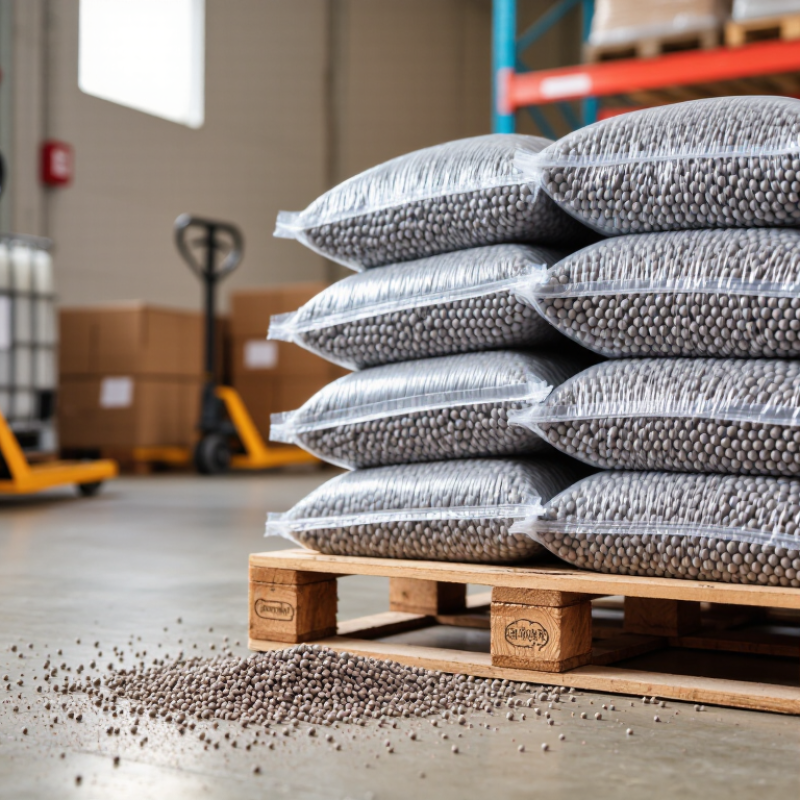
Granular Flower Fertilizer: Types, Uses, and Nutrient Composition
Granular flower fertilizer supplies nutrients slowly around the root zone. Common types include balanced, high-phosphorus, potassium-rich, and controlled-release granules. A 14-14-14 formula provides equal percentages of nitrogen, phosphate, and potash by weight. However, a higher phosphorus number does not guarantee more flowers. Soil pH, sunlight, moisture, and plant variety also influence flowering.
The International Fertilizer Association’s Fertilizer Outlook 2024–2028 projects global fertilizer demand to approach 205 million tonnes of nutrients by 2028. This figure measures nutrient content, not finished product weight. For flowering plants, nitrogen supports leaves and stems, while phosphorus supports roots and reproductive growth. Potassium improves water regulation and stress tolerance. Calcium, magnesium, sulfur, iron, and boron may be needed in smaller amounts.
Application should follow soil testing and label rates. A practical range is often 20–40 grams per square meter, but product strength varies. Mix granules lightly into moist soil, keeping them away from direct stem contact. Controlled-release products can reduce feeding frequency, especially in containers. Still, release speed changes with heat and irrigation.
A soil test matters more than appearance.
Wholesale buyers should request nutrient guarantees, particle-size data, moisture limits, and batch test records. The FAO fertilizer statistics framework also emphasizes reporting nutrients separately, which helps compare suppliers fairly. One weakness remains: a visually uniform granule may hide uneven nutrient distribution. Small trial orders and independent testing are sensible before large procurement.
Choosing China’s best granular flower fertilizer wholesale suppliers requires evidence, not attractive packaging. FAO’s World Fertilizer Trends and Outlook to 2026 projected global nutrient demand near 200 million tonnes by 2026. This scale increases supply options, but also increases quality variation. Request a current specification sheet, certificate of analysis, safety documentation, and production batch number. The label should clearly state nitrogen, phosphate, potash, secondary nutrients, and micronutrients.
Granule consistency matters in greenhouse beds and commercial nurseries. Check particle size distribution, dust levels, moisture, and dissolution behavior. A practical sample test can reveal uneven granules within one week. Ask for independent laboratory results covering nutrient accuracy, heavy metals, chloride, and microbial limits where relevant. ISO 9001 certification supports process control, but it does not replace batch testing. That distinction is often overlooked.
Export experience should include stable packaging, container loading records, customs documents, and traceable complaints handling. Ask whether the supplier can maintain the same formula across three consecutive orders. A small trial order is wiser than a full container. Keep retained samples for comparison. I have seen buyers focus on price per tonne and ignore application cost, especially when dusty granules create uneven feeding. That judgment needs correction. Compare usable nutrient cost, not only invoice value. Verify factory capacity through video inspection or an independent audit, and confirm lead times during peak seasons. Supplier claims can be polished. Your checks should not be.
China’s granular flower fertilizer industry is concentrated in several manufacturing belts. Shandong and Henan have strong access to nitrogen, phosphate, and potassium raw materials. Their factories often produce NPK granules for commercial nurseries and garden retailers. Jiangsu and Zhejiang add flexible packaging and private-label processing capabilities. These coastal provinces also support faster export logistics through nearby ports.
Supplier capabilities vary considerably. Experienced producers can adjust nutrient ratios for flowering plants, roses, orchids, and container gardens. They may offer uniform granule sizes, controlled-release coatings, and low-dust formulas. Some facilities operate rotary drum or tower granulation lines. These systems help reduce powder loss and improve spreading performance. A reliable supplier should provide batch records, laboratory test results, and clear raw material specifications. Ask for samples before approving a large order.
Packaging is another practical strength in China. Suppliers commonly handle moisture-resistant bags, resealable pouches, and printed cartons. Many can support small trial orders before full production. However, product consistency is not automatic. One batch may dissolve faster than another if moisture control is weak. I have found that factory visits, retained samples, and third-party testing reduce this risk. Certificates alone do not prove field performance. Buyers should compare granule hardness, nutrient analysis, odor, and storage stability under warm conditions. Some suppliers still need better communication about formulation changes. That weakness deserves attention during negotiations.
The chart compares major Chinese fertilizer-producing regions using a relative capability index based on granulation technology, NPK formulation flexibility, OEM/private-label support, quality control, and export logistics. The index is for regional comparison rather than market-share measurement.
Higher scores indicate stronger general manufacturing and export capabilities commonly associated with fertilizer production clusters. Shandong and Jiangsu are widely recognized for broad chemical manufacturing capacity, while Hubei, Henan, and Sichuan are important inland fertilizer-producing regions.
Wholesale buyers of granular flower fertilizer now examine quality evidence before negotiating price. The International Fertilizer Association’s 2024 Medium-Term Fertilizer Outlook reports global fertilizer demand above 190 million tonnes of nutrients annually. This scale makes batch control essential, even for decorative crops.
Reliable suppliers should provide a certificate of analysis for every production lot. It should state nitrogen, phosphorus, potassium, moisture, particle size, and heavy-metal results. Testing methods should follow recognized standards, such as ISO fertilizer analysis procedures or validated AOAC methods. Granules should remain free-flowing after transport. A practical inspection checks dust, crushing strength, color consistency, and caking after storage. These checks sound basic. They are often skipped.
Packaging also affects export reliability. Woven polypropylene bags with inner liners can reduce moisture entry during humid sea transport. Clear labels should show net weight, nutrient percentages, batch number, production date, storage conditions, and country of origin. The United Nations Recommendations on the Transport of Dangerous Goods should guide packaging when a formulation is classified for transport. Export files may include a commercial invoice, packing list, safety data sheet, certificate of origin, and destination-market registration documents. ISO 9001 certification supports process consistency, but it does not replace product testing. That distinction matters. Suppliers should disclose packaging limitations, test frequency, and any variation between batches. Buyers should still request independent pre-shipment inspection, because paperwork alone cannot reveal soft granules or moisture damage.
| Data Category | Wholesale Evaluation Dimension | Typical Requirement or Specification | Recommended Verification Evidence |
|---|---|---|---|
| Product Quality | NPK nutrient declaration | The nitrogen, phosphate, and potash content should be clearly declared as N-P2O5-K2O percentages. Common balanced garden formulations include 10-10-10 or 14-14-14, depending on crop requirements. | Product specification sheet, independent laboratory report, and batch test certificate. |
| Product Quality | Granule size and uniformity | Granules should be reasonably uniform, free-flowing, and suitable for mechanical or manual application. A practical commercial target is approximately 2–4 mm for many garden fertilizer products. | Sieve analysis, granule-size distribution data, and visual inspection sample. |
| Product Quality | Moisture and caking control | Low moisture helps reduce clumping during storage and transportation. The accepted moisture limit depends on the formulation and applicable product standard. | Moisture test result, storage-condition statement, and retained sample inspection. |
| Product Quality | Dissolution and nutrient release | The product should dissolve or release nutrients at a rate appropriate for its stated type, such as quick-release, controlled-release, or coated fertilizer. | Dissolution test, release-period data for coated products, and application instructions. |
| Product Quality | Contaminant control | Heavy metals and other contaminants must comply with the legal limits of the destination market. Limits vary by country, product category, and whether the fertilizer is mineral, organic, or blended. | Heavy-metal analysis covering relevant parameters such as lead, cadmium, mercury, and arsenic, where required. |
| Product Quality | pH and compatibility | The pH and chemical compatibility should be suitable for the intended flower or ornamental-plant application. Incompatible mixtures may cause nutrient precipitation or plant injury. | Technical data sheet, pH test result, and mixing or application guidance. |
| Packaging | Standard wholesale bag sizes | Common commercial formats include 1 kg, 5 kg, 10 kg, 20 kg, and 25 kg bags. The final packing size should match local handling, retail, and pallet requirements. | Approved packing specification, packaging artwork, and pre-shipment packing list. |
| Packaging | Bag material and moisture barrier | Multi-layer PP woven bags with an inner PE liner are widely used for granular fertilizers because they provide mechanical strength and improved moisture protection. | Material declaration, bag construction details, and packaging drop or sealing inspection. |
| Packaging | Label information | Labels should normally state product name, guaranteed analysis, net weight, batch or lot number, production date, directions for use, storage conditions, safety information, and responsible party details required by the destination market. | Destination-market label review and final artwork approval before production. |
| Packaging | Palletization and container loading | Bags should be stacked securely on suitable pallets or arranged with slip sheets where required. Container loading must protect the product from water exposure, crushing, and excessive movement. | Pallet plan, container loading photos, packing list, and seal number record. |
| Export Compliance | Quality management certification | ISO 9001 certification can demonstrate that a manufacturing site operates a documented quality management system. It does not replace product testing or destination-country fertilizer registration. | Current certificate showing the certified legal entity, site scope, and validity period. |
| Export Compliance | Product registration or market authorization | Some markets require fertilizer registration, notification, or conformity assessment before sale. Requirements depend on nutrient type, claims, organic content, and intended use. | Importer's regulatory checklist, registration number where applicable, and competent-authority documentation. |
| Export Compliance | Safety Data Sheet | An SDS should be supplied when required by the product classification or destination regulations. It should describe hazards, handling, storage, transport, and emergency measures. | Current SDS prepared in the language and format accepted by the destination market. |
| Export Compliance | Certificate of Analysis | A batch-specific COA should confirm guaranteed nutrients and relevant physical or chemical parameters against the agreed purchase specification. | Signed COA linked to the lot number, production date, and shipped quantity. |
| Export Compliance | Origin and shipping documents | Typical export documentation may include commercial invoice, packing list, bill of lading, certificate of origin, and any customs or inspection documents required by the importing country. | Document checklist reviewed against the sales contract and destination customs requirements. |
| Supplier Assessment | Traceability and batch control | Each shipment should be traceable from raw materials and production records to the packed lot and shipping documents. | Batch numbering procedure, production records, retained samples, and recall procedure. |
| Supplier Assessment | Pre-shipment inspection | Inspection should confirm product appearance, bag condition, net weight, labeling, loading quantity, and consistency with the approved specification. | Inspection report, sample photographs, weight records, and container loading report. |
Compliance note: Fertilizer standards, registration rules, labeling requirements, contaminant limits, and transport classifications differ by destination market. Buyers should verify the current requirements with the importing-country authority before placing a wholesale order.
Wholesale buyers should compare granular flower fertilizer by nutrient analysis, not by bag price alone. The International Fertilizer Association’s 2024 outlook places global fertilizer demand near 200 million tonnes of nutrients annually. That scale supports competitive Chinese supply, but raw material costs still affect quotations. FAO market monitoring also reports that fertilizer prices have eased from their 2022 peak, while remaining vulnerable to energy and shipping changes. Ask for a firm price period, usually seven to fifteen days. Request the NPK ratio, granule size, moisture level, and recent certificate of analysis. A practical order may begin with one pallet or several tonnes, depending on packaging and formulation. Lower minimum orders often carry higher prices.
Purchasing terms need equal attention. Confirm whether the quote includes export cartons, pallets, inland transport, and documentation. USDA soil fertility guidance supports matching nutrient applications with soil tests, so suppliers should provide clear application information. For flowering crops, buyers often compare balanced formulas with higher phosphorus or potassium, but crop stage matters. More phosphorus is not automatically better. Store samples in sealed bags and inspect for dust, caking, and uneven granules. It is a small test, yet it prevents expensive field problems. Payment protection, production lead time, and independent pre-shipment inspection also deserve written confirmation. I would not rely on catalogue photographs alone. Supplier claims can sound precise, while actual batch consistency may still need checking.
TO GET STARTED OR FOR A FREE QUOTE CALL 888.454.3466