
Choosing among China’s leading stainless steel syringe manufacturers takes more than comparing prices or polished product photos. Buyers should examine material specifications, capacity options, dimensional consistency, surface finish, and the clarity of each supplier’s inspection records. Stainless Steel Syringes may look similar on a catalog page. Small differences matter.
Quality-management expert W. Edwards Deming is widely associated with the principle, “Quality is everyone’s responsibility.” Though not specific to syringes, it offers a useful lens: dependable products rely on controlled processes, not appearance alone. Ask how manufacturers verify dimensions, document material grades, and manage batch-to-batch consistency. Request relevant technical documents and representative samples where appropriate. A mirror-like finish is easy to photograph; consistent performance is harder to assess.
This guide introduces ten China-based manufacturers and the practical questions worth asking before shortlisting them. Compare their stated capabilities against your application, required specifications, and service expectations. Look for clear answers on customization, quality checks, lead times, and after-sales support. Treat broad claims cautiously. A supplier’s published information may not reveal every limitation, and this comparison cannot replace direct verification. Some details will still need checking. That is an imperfect part of sourcing, but acknowledging it is more useful than pretending a ranked list settles every question.
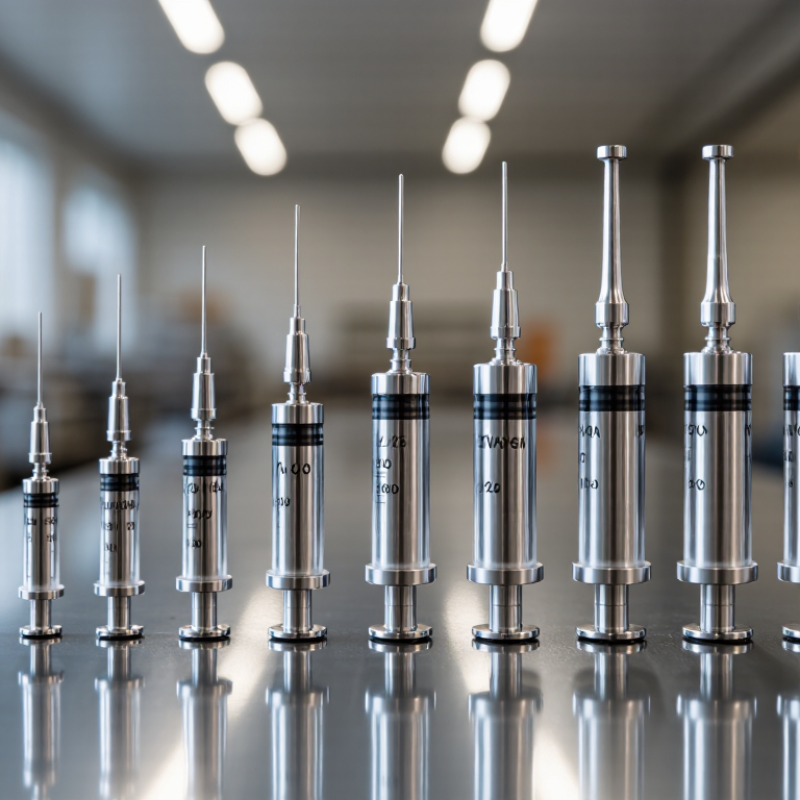
Stainless steel syringes typically use a metal barrel and plunger, with a tip and seals chosen for the intended task. Clear graduations help users measure small volumes, while a close-fitting plunger supports controlled dispensing. Designs vary: some have detachable tips, and others use fixed fittings. Small details matter.
The steel grade affects corrosion resistance, but no grade suits every fluid or cleaning method. Some applications use 316 stainless steel for added resistance to corrosion; actual suitability depends on exposure, finish, and construction. A smooth inner barrel can make cleaning easier, though it does not guarantee sterility. That distinction is easy to miss.
These syringes are used for laboratory sample transfer, equipment maintenance, and other precise fluid-dispensing tasks. Certain models are designed for clinical or veterinary settings, subject to their intended use and validated processing instructions. Before selecting one, check fluid compatibility, seal material, volume markings, and temperature limits. Reuse also requires appropriate cleaning and sterilization procedures. A durable metal body can withstand repeated handling, but seals and graduations may still wear. Inspect them.
Specified minimum alloying-element content in selected stainless steel grades (weight %)
304 and 316L are examples of stainless grades used in medical and reusable equipment components; the appropriate grade depends on the syringe design, fluid, cleaning, and sterilization requirements. Values show lower bounds in common ASTM A240 composition ranges, not the exact composition of any syringe. Molybdenum is shown as 0% for 304 because it is not a specified alloying addition in that grade.
China’s stainless steel syringe industry brings together metalworking, precision assembly, and inspection. Manufacturers may source stainless steel tubing, machine barrels and plungers, then polish contact surfaces to reduce friction. On a workbench, small differences matter: a rough edge, uneven plunger travel, or a loose seal can affect performance. Some factories also make needles or dosing components, while others focus on syringe bodies and assembly.
Production capability alone does not establish product quality. Buyers should review material specifications, dimensional checks, leakage tests, and batch traceability. Ask how the supplier handles surface finishing and verifies consistent volume delivery. These details are more useful than a broad claim of “high precision.” Still, a polished sample is not the whole story. Repeatability across production runs can be harder to judge, and supplier documents deserve careful review. That part is easy to overlook.
The industry’s strengths include established metal-processing capacity and access to component suppliers. Yet product requirements differ by application, so one design may not suit every user. Clear drawings, sample evaluation, and agreed inspection criteria help reduce misunderstandings. A practical conversation about tolerances and maintenance often reveals more than a sales brochure.
When comparing Chinese stainless steel syringe manufacturers, look beyond catalog photos. Ask for the specified steel grade, material certificates, and a clear method for tracing each production batch. Inspect the barrel, plunger, and needle connection for burrs, uneven finishes, or inconsistent fit. Small details matter. They can affect handling and repeatability.
Review how quality is checked during production, not only before shipment. Useful evidence may include inspection records, dimensional checks, leak-test procedures, and sample results. Ask how the manufacturer controls cleaning, packaging, and sterilization compatibility for your intended use. Verify documents with the issuing source where practical. A polished brochure can still leave unanswered questions.
Production capacity matters, but consistency matters more. Compare sample units with later production batches, and clarify tolerances, order quantities, lead times, and procedures for handling defects. Evaluate customization options carefully; changes to graduations, capacity, or connections should be documented and confirmed in writing. Communication is part of the assessment too. Clear, specific answers are more useful than broad assurances. No supplier is perfect, and a single sample cannot prove long-term performance, so allow time for repeat checks and independent technical review.
A closer look at ten leading stainless steel syringe manufacturers in China reveals different strengths in machining, assembly, and quality control. Some profiles emphasize smooth barrel interiors and clearly etched graduations; others focus on plunger fit, leak testing, or production flexibility. These details matter. A tight plunger should move evenly, without sticking or excessive play.
US$17.75 billion
Grand View Research valued the global syringe market at US$17.75 billion in 2023 and projected an 8.4% compound annual growth rate from 2024 to 2030. Its report covers syringes broadly, not stainless steel models alone, so the figure is useful market context, not proof of demand for reusable steel products. That distinction is easy to miss. Comparing suppliers therefore calls for product-specific evidence, including material specifications, dimensional inspection records, and documented sterilization processes where applicable.
The ten profiles are best treated as capability snapshots, rather than a strict ranking. Buyers can compare stated steel grades, volume ranges, engraving clarity, spare-part availability, and sample consistency. Ask how each factory checks barrel alignment and plunger travel. Request inspection records, too. A polished finish looks reassuring, but it cannot replace measurement. Supplier descriptions may also leave gaps; independent sample testing can reveal them.
Choosing among China’s stainless steel syringe manufacturers starts with the intended use, not the catalogue photo. Check capacity, graduation visibility, plunger smoothness, seal performance, and needle compatibility. For reusable models, ask how cleaning and reprocessing are validated. For single-use products, confirm sterile-barrier and packaging specifications. Fit matters.
Material claims need evidence. Request the steel grade, batch traceability, inspection records, and corrosion-test results. ISO 9626 covers stainless steel needle tubing; ISO 7886-1 applies to sterile, single-use hypodermic syringes, where relevant. Do not treat a standard reference as proof that every model complies. A 2014 analysis by Pépin and colleagues estimated that unsafe medical injections caused 1.7 million hepatitis B infections, 315,000 hepatitis C infections, and 33,800 HIV infections worldwide in 2010. The figures underline why process control matters, though they do not measure syringe quality directly. Check certificates against the actual product and lot, then review audit findings and complaint handling. Paperwork can look complete while leaving gaps. Ask for clarification. A factory visit or independent inspection may reveal practical details that a certificate cannot, such as how rejected units are segregated. One overlooked point can matter.
| No. | Evaluation Area | Product Selection Considerations | Quality Standards and Records to Review | Supplier Verification |
|---|---|---|---|---|
| 1 | Intended use and syringe type | Confirm whether the product is intended for injection, irrigation, dispensing, or another use; establish whether it is reusable or single-use. | Check the intended-use statement, instructions for use, and applicable regulatory requirements. Do not assume a standard for disposable plastic syringes applies to a reusable metal syringe. | Request the product specification and confirm that the intended use and reuse status match the planned application. |
| 2 | Capacity and graduations | Compare nominal capacity, graduation interval, scale visibility, and the suitability of the measuring range for the intended task. | Review drawings, tolerances, inspection methods, and any applicable measurement or product-specific requirements. | Ask for a controlled drawing and sample inspection records; verify graduations and capacity on representative samples. |
| 3 | Stainless steel grade and material traceability | Specify the required alloy and the parts made from it. Material suitability depends on the product design, fluid exposure, cleaning, and sterilization conditions. | Review material specifications and certificates. Confirm that the stated grade and applicable material requirements match the purchase specification. | Request traceability records linking material batches to finished products and check that certificates can be verified with the issuing source. |
| 4 | Construction and dimensional fit | Assess barrel and plunger fit, connection type, dimensional compatibility, and ease of assembly and disassembly where applicable. | Review approved drawings, dimensional tolerances, and in-process inspection procedures. | Compare samples with the approved drawing and confirm change-control procedures for design or tooling revisions. |
| 5 | Surface finish and cleanability | Inspect surfaces for burrs, sharp edges, visible defects, and features that could retain residue; evaluate cleanability for the intended reuse process. | Review documented surface-finish specifications and relevant cleaning or reprocessing validation, when applicable. | Examine samples under suitable lighting and request evidence that cleaning and inspection processes are controlled. |
| 6 | Leakage and functional performance | Check smooth plunger movement, connection security, and leakage performance under the product's specified operating conditions. | Request the applicable functional test methods, acceptance criteria, and batch inspection records. Requirements depend on the syringe design and intended use. | Confirm that test equipment is calibrated and that nonconforming products are identified and controlled. |
| 7 | Biological and chemical safety | Consider patient or user contact, contact duration, material composition, residues, and the effects of cleaning or sterilization. | Where applicable, review biological evaluation under the ISO 10993 series and the supporting risk-based rationale; do not treat one test as proof of overall safety. | Request relevant test reports or a biological evaluation summary and verify that they cover the supplied product and its materials. |
| 8 | Sterilization and reprocessing | Determine whether the product is supplied sterile or non-sterile and, if reusable, identify the validated cleaning and sterilization instructions. | For products supplied sterile, review the applicable validated sterilization process and records. ISO 11135 concerns ethylene oxide sterilization; ISO 11137 concerns radiation sterilization, where applicable. | Verify sterilization status, process scope, batch release documentation, and reprocessing instructions against the exact product configuration. |
| 9 | Packaging, labeling, and instructions | Check protection against damage and contamination, legibility of labeling, storage conditions, and clear instructions for use and reprocessing. | For sterile barrier packaging, assess the applicability of ISO 11607. Review relevant labeling and information requirements, including ISO 20417 and ISO 15223-1 where applicable. | Request packaging specifications, shelf-life or packaging validation evidence where relevant, and controlled copies of labels and instructions. |
| 10 | Quality system and supplier due diligence | Evaluate manufacturing controls, complaint handling, corrective actions, product traceability, and the supplier's ability to meet the required market regulations. | Review the scope and validity of any ISO 13485 certificate and applicable risk-management records, including ISO 14971 where relevant. Certification alone does not establish product compliance. | Verify certificates with the issuing body, confirm the legal manufacturer and manufacturing site, audit records as appropriate, and approve samples before production orders. |
Supplier-neutral evaluation matrix. The numbered rows are verification criteria, not a verified ranking of manufacturers. Applicable standards and regulatory requirements depend on product design, intended use, and target market.
TO GET STARTED OR FOR A FREE QUOTE CALL 888.454.3466