Sourcing sugar free energy drinks globally requires more than comparing prices on a supplier website. Buyers must examine formulation, manufacturing controls, documentation, and market suitability. A product that sells well in one country may fail another market’s labeling, caffeine, or ingredient requirements. That reality makes careful supplier research essential.
This guide presents ten practical tips for identifying reliable producers and managing international procurement. It considers factory audits, third-party laboratory testing, ingredient traceability, shelf-life evidence, packaging standards, and shipping conditions. Buyers should request current certificates, production samples, and batch-specific test reports before signing contracts. Small details matter. A damaged carton, unclear allergen statement, or unstable flavor can create costly delays.
Experienced importers also compare the complete landed cost, not only the quoted unit price. Freight, duties, insurance, warehousing, and compliance testing can change the final margin significantly. Suppliers should explain their minimum order quantities, lead times, private-label capabilities, and corrective-action procedures. References from established customers can provide useful evidence, although references should still be verified independently.
There is no universal sourcing shortcut. Even a professional checklist can miss local market differences or unexpected transport problems. Product claims such as “zero sugar” and “low calorie” require careful review against the destination market’s rules. Buyers should involve qualified regulatory advisers when uncertainty remains. With disciplined verification and realistic expectations, companies can build a safer, more resilient supply chain for sugar free energy drinks. Mistakes may still happen, but documented decisions make them easier to identify and correct.
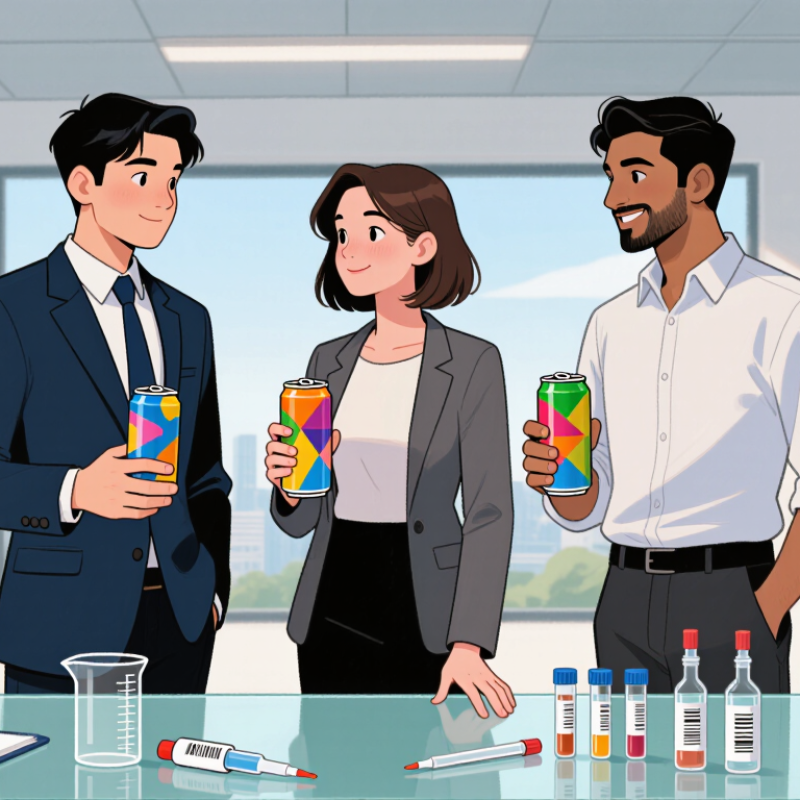
Sugar-free sourcing starts with a precise legal definition. Under EU Regulation (EC) No 1924/2006, “sugar-free” means no more than 0.5 grams of sugars per 100 millilitres. This limit applies to the finished beverage, not only the syrup concentrate. Ask suppliers for batch-specific laboratory results, ingredient specifications, and production records. Check glucose, fructose, sucrose, lactose, and hidden carbohydrate sources. Small differences matter.
Market demand supports careful sourcing. Grand View Research valued the global energy drinks market at approximately USD 86.7 billion in 2022. Euromonitor International also identifies reduced-sugar beverages as a continuing global development. However, market growth does not prove compliance. Request independent testing under validated methods, preferably from ISO/IEC 17025-accredited laboratories. Review the certificate date, sample identity, detection limit, and testing method. A supplier’s marketing sheet is not enough.
Compare the declared sugar level with local rules before shipment. Some markets regulate “sugar-free,” “no sugar,” and “zero sugar” differently. Confirm serving size calculations, language requirements, caffeine declarations, and warning statements. Keep sealed retention samples from each production lot. Test them after transport when heat exposure is possible. I would not rely on one passing report. Formulas, packaging lines, and suppliers change. That uncomfortable gap deserves attention. Personally, I would reject unclear documentation, even when the price looks attractive.
When sourcing sugar-free energy drinks globally, begin with the WHO recommendation on free sugars. Free sugars should provide less than 10% of daily energy intake. A lower level, near 5%, may offer additional health benefits. This matters when comparing products across markets.
Check every nutrition panel, not only the front label. Review total sugars, added sugars, serving size, and carbohydrate values. A 250-millilitre can may look modest, yet some consumers drink several cans daily. Confirm whether “sugar-free” meets the destination market’s legal definition. Requirements can differ between countries. Request recent laboratory reports for sugar content, caffeine, sweeteners, acidity, and contaminants. Independent testing adds confidence. Supplier audits, traceability records, and clear batch codes also support reliable purchasing.
Energy drinks often replace sugar with approved sweeteners, but formulation choices still need careful review. WHO guidance does not support relying on non-sugar sweeteners for long-term weight control. Consider taste, labeling, and consumer expectations together. Ask suppliers for stability data after heat exposure during shipping. A hot container can change flavor and texture. I have learned that a polished specification sheet is not enough. Documents may be complete, while warehouse controls remain weak. Visit facilities when possible, and compare production samples with the approved formula. Keep claims factual, especially around energy, performance, and health. Local regulatory specialists should verify packaging before launch, because translation errors and unsupported claims can delay clearance.
Caffeine control should guide every sugar-free energy drink sourcing decision. EFSA’s Scientific Opinion on the Safety of Caffeine confirms that healthy adults can generally consume up to 200 mg in one serving and 400 mg daily. Pregnant and breastfeeding women should stay within 200 mg per day. These figures are useful procurement limits, not marketing claims. A 500 ml can containing 32 mg per 100 ml reaches 160 mg. Two cans may approach the daily ceiling quickly. Labels must show caffeine clearly, including caffeine from guarana, tea extract, or other concentrated ingredients.
Formulas should be checked against laboratory results, not supplier declarations alone. Independent testing can verify caffeine, sweeteners, taurine, vitamins, and contaminant limits. The International Food Information Council’s 2024 Food and Health Survey reported that consumers increasingly examine ingredient information and product claims. That trend makes transparent specifications commercially important. Sugar-free does not mean stimulant-free. It also does not guarantee low calories or better tolerance. Some buyers overlook serving size, which is a costly mistake.
For global sourcing, request a batch-level certificate of analysis and a documented production history. Compare caffeine per serving, per 100 ml, and per container. Keep a safety margin below 200 mg. This is prudent, though not always easy. Packaging, local labeling rules, and serving conventions differ across markets. Euromonitor’s global soft-drinks reporting continues to identify reduced-sugar innovation as a major category direction. Yet “reduced sugar” and “sugar-free” are not interchangeable terms. Procurement teams should review both claims with local regulatory specialists before approval.
Global sourcing of sugar-free energy drinks requires more than checking sweetness and price. The critical trigger is caffeine. Under EU Regulation (EU) No 1169/2011, drinks containing more than 150 mg/L caffeine need a clear warning. The label must state “High caffeine content” and advise against consumption by children, pregnant women, and breastfeeding women. Caffeine content must also appear in mg per 100 ml. A small mistake can create costly relabeling.
Tip 1: Request laboratory certificates for every production batch. Do not rely only on supplier specifications. Formulas can change between factories. EFSA’s 2015 scientific opinion reports that healthy adults can generally consume up to 400 mg caffeine daily, while pregnant women should remain below 200 mg. These are safety reference points, not marketing claims. Tip 2: Convert caffeine values into both mg/L and mg/100 ml before approval. A 500 ml can containing 160 mg/L delivers 80 mg caffeine. That detail matters.
Tip 3: Check each destination separately. Sugar-free status may depend on sweetener rules, nutrition claims, and language requirements. Euromonitor International’s 2024 soft drinks analysis identifies energy drinks as a resilient global category, supported by demand for low-sugar products. Yet growth can encourage rushed sourcing. I have seen teams approve attractive packaging before reviewing warnings. That order needs reconsideration. Keep the warning visible near the product description, use durable print, and retain test records for audits.
| No. | Sourcing Dimension | Recommended Sourcing Tip | Verified Regulatory or Technical Data | Key Documents or Checks |
|---|---|---|---|---|
| 1 | Caffeine classification | Ask suppliers to provide the finished-product caffeine concentration for every market-specific formula, rather than relying only on the recipe specification. | In the EU, beverages other than coffee or tea-based drinks with caffeine above 150 mg/L require a high-caffeine warning. This equals more than 15 mg per 100 ml. | Batch-specific laboratory report, formulation sheet, and calculation of caffeine per serving and per 100 ml. |
| 2 | EU warning statement | Build the required warning into the artwork approval process whenever the finished drink exceeds the EU caffeine threshold. | The EU warning is: “High caffeine content. Not recommended for children or pregnant or breast-feeding women.” It must appear in the same field of vision as the name of the beverage, followed by the caffeine content in mg per 100 ml. | Final label proof, translated artwork, legibility review, and market-specific regulatory sign-off. |
| 3 | Sugar-free claim | Source formulas that can support a legally defensible “sugar-free” claim in the destination market, and separate that claim from “low calorie” or “no added sugar.” | Under EU nutrition-claim rules, “sugars-free” generally requires no more than 0.5 g of sugars per 100 ml. “No added sugars” is a different claim and does not necessarily mean the product contains no sugars. | Nutrition analysis, ingredient list, carbohydrate and sugar specification, and claim review for each destination country. |
| 4 | Sweetener compliance | Request the exact sweetener system and its concentration, including the function of each sweetener and any required consumer information. | Authorized sweeteners have specific conditions of use and maximum permitted levels under applicable legislation. Products containing certain sweeteners may require additional statements, such as a laxative-effect warning when the relevant polyols exceed the applicable threshold. | Full ingredient specification, additive identifiers, use-level calculations, and local maximum-use confirmation. |
| 5 | Serving-size control | Compare caffeine and stimulant levels on both a per-100-ml basis and a full-container basis before selecting a supplier. | A 500 ml can containing 32 mg of caffeine per 100 ml delivers 160 mg of caffeine per can. The EU warning threshold is assessed by concentration, while consumer exposure also depends on container size. | Pack-size specification, serving declaration, caffeine-per-container calculation, and consumer-use review. |
| 6 | Ingredient transparency | Prefer suppliers that disclose all active ingredients, botanical extracts, taurine, vitamins, minerals, acids, preservatives, and processing aids before quotation. | Ingredient names and additive designations must be checked against the destination market’s authorized substances and labeling requirements. Caffeine from multiple sources must be included in the total caffeine calculation. | Master ingredient list, certificates of analysis, supplier declarations, and formula change-control procedure. |
| 7 | Food-safety system | Prioritize manufacturers operating a documented HACCP-based food-safety system and maintaining traceability from ingredients to finished lots. | EU food businesses are required to apply principles based on hazard analysis and critical control points. Traceability should identify the immediate supplier and the immediate business customer for each lot. | HACCP plan, food-safety audit, lot-traceability test, allergen controls, sanitation records, and recall procedure. |
| 8 | Packaging and shelf life | Select packaging based on carbonation, acidity, light exposure, transport temperature, and the required shelf life rather than price alone. | Carbonated beverages require packaging that can withstand internal pressure. Acidic drinks may require compatible can or bottle materials and suitable internal coatings to reduce corrosion and quality deterioration. | Packaging specification, pressure and compatibility data, migration documentation where applicable, accelerated shelf-life study, and transport test. |
| 9 | Import and market access | Confirm importer-of-record responsibilities, customs classification, language requirements, and destination-country registration or notification obligations before production. | Food labeling, nutrition declarations, caffeine warnings, additives, recycling marks, and deposit requirements can differ by jurisdiction even when the same formula is used. | Destination-country compliance checklist, customs code review, importer details, multilingual label review, and authority correspondence where required. |
| 10 | Quality release and testing | Make shipment release conditional on independent or accredited testing of caffeine, sugars, microbiology, and declared nutritional values. | Testing should confirm that the finished product matches the approved formula and label. Caffeine concentration, sugar content, pH, carbonation, and microbiological criteria should be evaluated using validated methods appropriate to the product. | Pre-shipment certificate of analysis, retained samples, finished-batch specifications, nonconformance process, and periodic third-party verification. |
| Reference framework: EU Regulation (EU) No 1169/2011 on the provision of food information to consumers; Commission Regulation (EC) No 1924/2006 on nutrition and health claims; Commission Regulation (EC) No 1333/2008 on food additives; Regulation (EC) No 852/2004 on the hygiene of foodstuffs; and Regulation (EC) No 178/2002 on food-law principles and traceability. Always confirm the current rules in the specific destination market before commercialization. | ||||
Global sourcing of sugar-free energy drinks should begin with food-safety evidence, not attractive specifications.
Supplier qualification requires a documented HACCP system covering water, caffeine, sweeteners, acidity, filling, and finished-product storage. Codex Alimentarius identifies hazard analysis and critical control points as core controls for food safety. Ask for hazard records, monitoring limits, corrective actions, and verification results.
ISO 22000 certification adds structure but the certificate must cover the exact beverage site and production scope. Check the certification body and expiry date. A certificate alone is not proof.
In practical supplier reviews, outdated scopes and copied procedures still appear. The ISO Survey 2023 shows more than 70,000 ISO 22000 certificates worldwide, yet certification numbers do not replace an on-site assessment. Review sanitation logs, allergen controls, pest records, water testing, and traceability exercises.
Every production lot should include a batch COA linked to its manufacturing code.
Confirm laboratory methods and acceptance limits for sugar, caffeine, sweeteners, microbiology, heavy metals, allergens, and contaminants. Sugar-free claims need special attention across markets.
The World Health Organization recommends keeping free sugars below 10% of daily energy intake, with additional benefits below 5% (WHO, 2015).
That guidance is not a universal labeling rule. Local requirements differ. Request sealed retain samples and independent testing for the first shipments. It costs more, but one unchecked assumption can become a costly recall.
Perfect paperwork is impossible; disciplined follow-up is still essential.
TO GET STARTED OR FOR A FREE QUOTE CALL 888.454.3466