
Choosing an oil free compressor is a technical decision, not simply a purchasing exercise. Global buyers must examine air purity, energy consumption, operating pressure, maintenance access, and supplier support. A clean specification can prevent expensive surprises later.
Ron Marshall, a recognized compressed-air systems specialist, has said, “The compressor is only one part of the compressed-air system.” That observation deserves attention. An efficient machine can still perform poorly when piping is undersized, dryers are mismatched, or demand fluctuates sharply. The visible compressor is only the beginning.
This guide reviews leading oil free compressor manufacturers serving international markets. It considers rotary screw, centrifugal, scroll, and reciprocating technologies. It also examines ISO 8573-1 air-quality classifications, cooling arrangements, controls, warranties, and lifecycle costs. Factory certification matters. So does the technician who answers at 2 a.m.
For pharmaceutical filling lines, even a trace of contamination can threaten product quality. In electronics production, unstable air can affect delicate handling equipment. In food packaging, careless selection may create unnecessary compliance concerns. These details make supplier evaluation more than a comparison of motor ratings and catalog prices.
Experience shows that the lowest purchase price is rarely the lowest total cost. Yet premium equipment is not automatically the right answer. Site conditions, load profile, climate, voltage, and local service capacity can change the decision. No ranking is perfect. Buyers should challenge every claim, request performance data, and speak with existing users.
The manufacturers discussed here are assessed through practical criteria, not promotional language. Their technology, reliability, documentation, and support networks all deserve scrutiny. A careful choice can deliver cleaner air, steadier production, and fewer unpleasant surprises.
Top Oil Free Compressor Manufacturers for Global Buyers
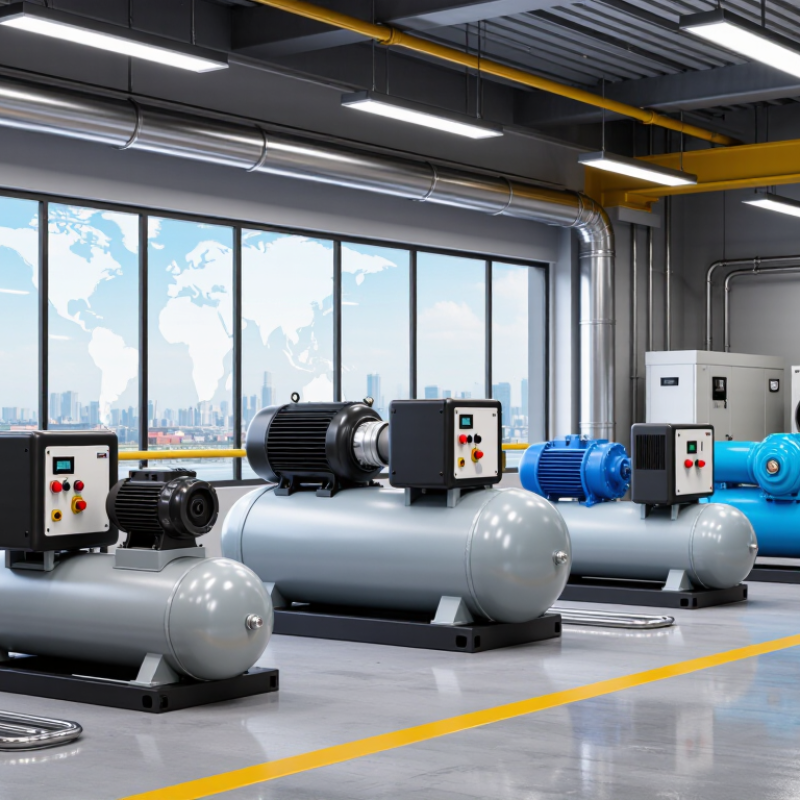
Oil-free compressors serve industries where air quality cannot be compromised. Scroll compressors suit dental clinics, laboratories, and small electronics lines. Their compact design produces clean air with limited vibration. Reciprocating models handle intermittent demand, such as packaging machines and workshop tools. They are simple, but their pulsation needs attention.
Oil-free screw compressors support continuous production in food processing, pharmaceuticals, and semiconductor plants. They deliver stable airflow and avoid lubricant contamination. Centrifugal compressors fit large facilities with steady, high-volume demand, including wastewater treatment and chemical processing. The U.S. Department of Energy reports that compressed-air systems may consume 10–20% of a plant’s electricity. That figure makes efficiency more than a purchasing detail.
Energy losses are often overlooked. Leaks, excessive pressure, and poor controls can waste substantial power. The European Commission’s Best Available Techniques guidance recommends reducing leakage and optimizing system pressure. In real plant audits, technicians commonly find unused branches left pressurized. Not elegant, but common. Buyers should compare specific power, flow stability, noise, cooling requirements, and maintenance intervals. ISO 8573-1 air-quality classes also help match compressor output with process risk. A medical application needs stricter control than a general pneumatic tool. The wrong type may still run, yet quietly increase operating costs.
Representative maximum discharge pressure by compressor technology, shown in bar(g)
Oil-free scroll compressors are commonly used for dental air, laboratories and light-duty instrumentation. Dry screw compressors support continuous plant air in food and beverage, pharmaceuticals, electronics and general manufacturing. Oil-free reciprocating compressors can reach higher pressures for PET blowing, breathing air and specialized process systems, while centrifugal compressors are suited to large-volume applications such as wastewater treatment, refineries and chemical plants. Actual performance depends on configuration, cooling method and operating conditions.
Top Oil Free Compressor Manufacturers for Global Buyers
How Oil-Free Compressor Technology Works
Oil-free compressors produce air without lubricant entering the compression chamber. Instead, engineers use carefully machined rotors, low-friction coatings, or water for cooling and sealing. In dry screw designs, two rotors turn with precise clearance. They compress air without touching each other. Timing gears keep their movement synchronized.
Some systems use oil in separate gearboxes or bearing housings. Seals prevent that oil from reaching the air path. Multi-stage equipment may include intercoolers, moisture separators, and final filters. These components reduce heat and remove condensate before air reaches sensitive production equipment. The result can support pharmaceutical, food, electronics, and laboratory operations.
It is not maintenance-free.
Operators should inspect seals, coatings, filters, bearings, and cooling systems at scheduled intervals. High ambient temperatures can reduce efficiency and shorten service life. Dusty intake air creates another practical risk. During site evaluations, I would check pressure stability, sound levels, drain performance, and service access. A certified Class 0 rating under ISO 8573-1 can support purchasing decisions, but buyers should verify the exact test scope. “Oil-free” describes the delivered compressed air, not necessarily every internal component. That distinction is easy to miss.
For global buyers, an oil-free label is only a starting point. The meaningful question is whether the delivered air meets the required purity class. ISO 8573-1 provides a practical framework for particles, water, and oil. For sensitive medical, laboratory, or food processes, request documented ISO 8573-1 Class 0 test results. Do not rely on a brochure alone. Ask for the test method, sampling point, laboratory competence, and report date. A certificate without scope can mislead purchasing teams.
Safety compliance also changes by destination. CE marking may apply in the European market, while UKCA or other national requirements may apply elsewhere. Electrical panels should match applicable IEC standards, and pressure equipment may require local vessel approval. Check EMC, machinery safety, and energy documentation before shipment. RoHS and REACH declarations can support restricted-substance reviews, but they do not replace product safety certification. The paperwork matters. It should identify the exact model, serial range, revision, and responsible conformity party.
Experienced buyers also examine factory controls. Request factory acceptance records, final air-quality tests, calibration certificates, and maintenance instructions. A competent manufacturer can explain how inlet filtration, dryers, receivers, and piping protect purity after compression. That detail often separates a genuinely oil-free installation from an oil-free compressor with contaminated downstream equipment. I would also verify service access in the destination country. This is easy to overlook. Standards reduce uncertainty, but certificates cannot replace a site-specific risk review.
| Evaluation Dimension | Applicable Standard or Certification | Verified Requirement | Why It Matters to Global Buyers | Recommended Evidence | Buyer Priority |
|---|---|---|---|---|---|
| Compressed-Air Purity | ISO 8573-1 | Defines classes for solid particles, water and total oil in compressed air. ISO 8573-1 Class 0 requires the user and supplier to define the most stringent permissible contamination level. | Critical for food, pharmaceutical, electronics, medical and other contamination-sensitive applications. | Independent laboratory report stating the tested purity class, sampling location, operating pressure and test conditions. | Essential |
| Oil-Free Performance | ISO 8573-1 oil classification and documented test method | The equipment must be designed without oil in the compression chamber. Total oil performance should be verified under specified load, temperature and pressure conditions. | Prevents product contamination and reduces the risk of downstream oil-removal failures. | Technical datasheet, cross-sectional description of the compression chamber and third-party oil-aerosol or oil-vapor test results. | Essential |
| Compressor Capacity and Efficiency | ISO 1217 | Provides methods for acceptance tests and performance measurement of displacement compressors, including delivered flow, power input and specific energy requirements. | Allows comparable evaluation of air output and energy consumption across international suppliers. | Certified or witnessed performance test report showing FAD, inlet conditions, discharge pressure, motor input and specific power. | Essential |
| Noise Measurement | ISO 2151 and/or ISO 3744 | ISO 2151 provides an engineering method for determining noise emission from compressors. ISO 3744 is commonly used to determine sound power levels from sound-pressure measurements. | Supports workplace noise compliance, building design and installation planning. | Noise test report identifying the measurement standard, operating point, microphone arrangement and sound-power result in dB(A). | High |
| Quality Management | ISO 9001 | Confirms that the organization operates a documented quality-management system covering processes such as design, production, inspection and corrective action. | Improves consistency, traceability and supplier-control practices, but does not by itself certify compressor performance. | Valid certificate issued by an accredited certification body, including scope, sites covered and validity dates. | High |
| Environmental Management | ISO 14001 | Provides a framework for controlling environmental impacts, legal obligations, resource use, waste and continual improvement. | Useful for corporate sustainability programs, environmental audits and responsible procurement requirements. | Current certificate, certification scope and environmental-policy or compliance documentation. | Medium |
| Occupational Health and Safety | ISO 45001 | Establishes requirements for managing occupational health and safety risks and improving workplace safety performance. | Helps buyers assess manufacturing-site safety governance and supplier risk management. | Valid certificate with the applicable manufacturing locations and certification scope. | Medium |
| Pressure Equipment Compliance | Pressure Equipment Directive 2014/68/EU, where applicable | Applies to specified pressure equipment and assemblies placed on the European Economic Area market. Classification depends on pressure, volume, fluid group and equipment category. | Important for legal market access and documentation when the compressor package includes covered pressure vessels or assemblies. | EU Declaration of Conformity, CE marking information, technical file references and notified-body documentation when required. | Essential for EEA |
| Electrical and Machinery Safety | Applicable national machinery, electrical-safety and electromagnetic-compatibility requirements | Covers safeguards, control panels, electrical protection, grounding, emergency stops and electromagnetic compatibility according to the destination market. | Reduces installation delays and supports local inspection or acceptance procedures. | Destination-market Declaration of Conformity, electrical diagrams, safety-risk assessment and test records. | Essential |
| Materials and Product Contact Safety | Application-specific food, pharmaceutical or hygienic-design requirements | Materials, lubricants, seals, coatings and condensate-management components must be suitable for the process and contamination-control requirements. | Oil-free compression alone does not automatically make the entire air system suitable for direct product contact. | Material declarations, hygienic-design information, cleaning instructions and application-specific compliance statements. | High for sensitive processes |
| Factory Acceptance Testing | Contract-specific FAT procedure, normally aligned with ISO 1217 | Confirms the supplied unit meets agreed requirements for flow, pressure, power, noise, vibration, controls and alarms before shipment. | Provides objective evidence that the delivered package matches the purchase specification. | Signed FAT protocol, calibrated instrument records, serial-number traceability and deviation log. | Essential |
| After-Sales and Global Service | Contractual service-level requirements; local regulatory requirements where applicable | Assesses spare-parts availability, response time, preventive-maintenance procedures, remote support, training and warranty coverage. | Service accessibility can determine lifecycle cost and production uptime more than the initial purchase price. | Service network list by region, spare-parts lead times, warranty terms, maintenance schedule and escalation contacts. | Essential |
Note: Required certifications and conformity documents depend on the compressor configuration, installation location, industry and destination market. Buyers should verify certificate validity, certification scope, testing conditions and the exact equipment model before purchase.
Oil-free compressor manufacturers compete through specific product strengths, not simple size claims. The U.S. Department of Energy reports that compressed-air systems can consume 10% to 30% of industrial electricity. Efficiency therefore matters beyond the purchase price.
Rotary screw models suit factories requiring steady airflow across long shifts. Variable-speed drives can reduce unloading losses when demand changes. However, savings depend on controls, leakage, and operating pressure. Buyers should request measured performance at their actual duty point, not only catalog efficiency.
Scroll compressors provide quiet, compact air for laboratories, clinics, and light production. Their simple compression path can support lower maintenance needs, though capacity is usually limited. Centrifugal systems fit large, stable demand and can deliver high flow with low vibration. They are less forgiving when demand fluctuates sharply. Small errors matter.
The ISO 8573-1 standard helps buyers specify air purity, including oil, particles, and moisture classes. Manufacturers with strong product credibility should provide Class 0 test evidence, lifecycle energy data, and service records. The European Commission’s energy-efficiency guidance also identifies compressed-air optimization as a practical industrial saving opportunity. Yet, product claims are not always comparable. Independent testing, installation references, and clear warranty conditions remain essential for global purchasing decisions.
Top Oil Free Compressor Manufacturers for Global Buyers
How to Compare Suppliers, Costs, and After-Sales Support
Comparing oil free compressor suppliers requires more than checking the lowest quotation. Review air purity data, flow stability, pressure range, noise levels, and energy consumption. Ask for test reports that reference ISO 8573-1 classifications. A clear technical file shows stronger engineering discipline.
Purchase price is only one cost. Calculate electricity use, filter replacement, drying requirements, installation, and scheduled servicing over five to ten years. Request a written breakdown for spare parts and technician labor. A cheaper unit may consume more power during continuous production. That difference becomes expensive. Delivery terms also matter. Confirm packaging standards, local duties, commissioning fees, and expected arrival dates before signing.
After-sales support often separates reliable suppliers from ordinary sellers. Check warranty duration, response times, remote diagnostic options, and available service engineers near your facility. Ask whether critical parts can arrive within days or several weeks. Request two customer references with similar operating conditions. During a factory evaluation, inspect assembly records and pressure-testing procedures when possible. Photos alone are weak evidence.
No comparison is perfect. Production data can change after installation. Leave room for uncertainty, and ask suppliers to state their assumptions. A supplier that admits limitations may be more dependable than one promising flawless performance. The final decision should balance verified efficiency, maintainability, documentation, and practical support.
TO GET STARTED OR FOR A FREE QUOTE CALL 888.454.3466