What Is French Fries Modeling Gummy Candy?
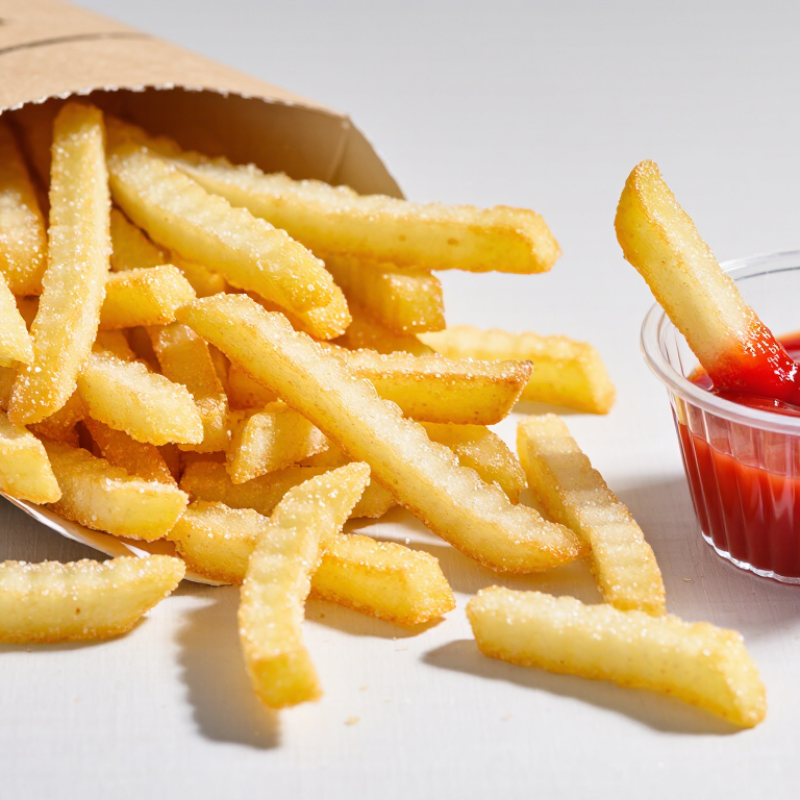
French Fries Modeling Gummy Candy is a novelty confectionery product designed to resemble thin French fries. It uses a playful shape, sweet flavor, and chewy texture instead of potato and salt. The pieces may appear pale yellow, ridged, and lightly dusted with sugar. Some versions include ketchup-style fruit sauce or a separate dipping pouch.
The product fits the growing interest in visual and experience-led sweets. Grand View Research reported that the global gummy market was valued at more than USD 20 billion in 2022, with strong growth projected through 2030. Its analysis connects this expansion with innovative shapes, convenient portions, and younger consumers’ interest in playful products. Innova Market Insights has also identified novelty formats and sensory engagement as important confectionery development themes. These findings help explain why a candy shaped like a familiar snack can attract attention online and in specialty stores.
However, “modeling” is not a perfectly standardized industry term. It can suggest a molded gummy, but some buyers may expect a candy that can actually be shaped by hand. That expectation needs clearer packaging language. A reliable product description should identify its ingredients, allergen information, texture, flavor, and intended serving method. Gelatin-based and pectin-based recipes can behave differently during chewing. Manufacturing experience also matters, because thin gummy pieces may dry unevenly or stick together. French Fries Modeling Gummy Candy is therefore more than a visual joke. It combines food design, texture control, packaging accuracy, and responsible consumer communication. The concept is clever, but its labeling still deserves careful refinement.
French Fries Modeling Gummy Candy: Definition, Shape, and Product Category
What Is French Fries Modeling Gummy Candy?
French fries modeling gummy candy is a molded sugar confection designed to resemble thin fried potato sticks. “Modeling” describes the visual form, not a modeling material. The candy usually has narrow, ridged pieces, a lightly curved profile, and a soft, elastic bite. Its color may imitate golden fries, although the flavor is typically fruity, sweet, or mildly tangy. It is candy, not a savory snack.
The product belongs to the novelty gummy and molded sugar confectionery category. It combines playful shape recognition with familiar gummy texture. This makes it suitable for mixed candy assortments, themed displays, and portion-controlled packages. Grand View Research estimated the global gummy market at about USD 19.9 billion in 2023, with strong growth expected through 2030. That wider trend supports demand for imaginative formats, but it does not prove that every novelty shape will perform well.
Packaging and labeling still matter. Consumers should find clear information about ingredients, allergens, net weight, and storage conditions. Texture can change in heat, humidity, or poor sealing. In practical product testing, the fry shape should remain recognizable without becoming sticky or brittle. A small detail matters: overly deep ridges may trap sugar dust and weaken the piece. The concept is memorable, yet not perfect. Some buyers may expect a salty taste after seeing the shape. Product descriptions must correct that expectation quickly. Confectionery category definitions also vary across market reports, so sales comparisons need careful interpretation.
Typical 6–10% Gelatin, 50–60% Sugar, and 30–40% Syrup Formula
What Is French Fries Modeling Gummy Candy?
French fries modeling gummy candy is a playful confection shaped like thin potato strips. It looks familiar, but its texture comes from gelatin, sugar, syrup, and controlled moisture. The pieces should bend slightly before becoming pleasantly chewy. Food-grade coloring can create a pale golden surface, while mild vanilla or fruit flavor keeps the profile balanced.
A practical formula uses 6–10% gelatin, 50–60% sugar, and 30–40% syrup by total batch weight. For a 1,000-gram batch, that means 60–100 grams of gelatin, 500–600 grams of sugar, and 300–400 grams of syrup. The remaining percentage allows space for water, flavor, color, and acidity. This balance is not automatic. More gelatin can produce a firm, rubbery bite. More syrup may create softer pieces and a stickier finish.
My first test would likely fail slightly. The strips might lose their edges during cutting. That usually signals excess heat, weak setting, or insufficient drying time. Dissolve gelatin carefully, then cook the sugar mixture with accurate temperature control. Pour it into a shallow tray, cool it fully, and cut narrow strips with a lightly oiled knife. Drying improves handling, but too much drying causes cracking. Clean tools, verified food-grade ingredients, and batch records support safer, more repeatable production.
The fry shape is simple. The texture is not.
Texture Targets: 75–80°Brix, Chewiness, Moisture, and Shelf Stability
What Is French Fries Modeling Gummy Candy?
French fries modeling gummy candy recreates the slim shape, golden color, and soft bite of fried potatoes without using potato ingredients. The texture target is usually 75–80°Brix, measured with a calibrated refractometer under ISO 2173 guidance. This high soluble-solids level supports body and reduces available water. It does not guarantee shelf stability.
In pilot production, syrup temperature, gelatin or pectin level, and drying time can change the bite dramatically. A candy can reach 78°Brix yet feel sticky. That happens when moisture remains unevenly distributed. USDA FoodData Central demonstrates why moisture values vary across foods, so one moisture percentage cannot define quality. Water activity should also be tested. The FDA Food Code uses 0.85 as an important control threshold, but yeast and mold may still grow below it. A practical gummy target often requires lower water activity, validated packaging, and real-time shelf-life testing. I would not treat Brix alone as proof of stability.
Tips: Measure Brix at a consistent sample temperature. Check moisture and water activity from the same batch. Record chewiness after 24 hours, seven days, and four weeks. Use a light sugar coating only after the surface has dried. Inconsistent drying is common. A small texture panel can reveal toughness that instruments miss. One more detail matters: the fry-shaped pieces need enough flexibility to bend slightly, but not so much that their edges collapse during packing.
French Fries Modeling Gummy Candy: Texture and Stability Targets
The chart shows midpoint development targets for a gummy candy designed to resemble French fries. Higher soluble solids support a firm gel structure and lower free-water availability, while chewiness, controlled moisture, and adequate shelf life help maintain texture during storage.
| Parameter | Target Range | Chart Value |
| Soluble solids | 75–80 °Brix | 77.5 °Brix |
| Moisture content | 10–14% | 12% |
| Instrumental chewiness | 3–8 N | 5.5 N |
| Shelf-stability target | 6–12 months | 9 months |
Food Safety and Labeling: Gelatin, Colors, Allergens, and Regional Standards
What Is French Fries Modeling Gummy Candy?
French fries modeling gummy candy imitates the shape of thin, salted fries. Its playful appearance does not remove food safety duties. The recipe may contain gelatin, sugar, acids, starch, and approved color additives. Gelatin deserves careful attention. It can come from pork, beef, or fish, so the animal source should be clearly identified. “Gelatin” alone may leave consumers uncertain.
Allergen control also matters. The FDA recognizes nine major food allergens, including milk, wheat, soy, and sesame. FARE estimates that more than 33 million Americans live with food allergies. Even when gelatin is not a major allergen, shared equipment can transfer allergenic ingredients. A clean-looking candy can still create a labeling problem. That detail is easy to miss.
Color names vary by region. In the United States, color additives must meet FDA requirements, while European rules may require different names or usage conditions. The EU recognizes 14 regulated allergens under Regulation (EU) No 1169/2011. Imported candy therefore needs a market-specific label, not a copied package. Ingredient order, nutrition values, warning statements, and language can change. The Codex General Standard for the Labelling of Prepackaged Foods offers useful international guidance, but it does not replace local law. One practical weakness remains: small producers may trust supplier documents too quickly. Batch records, allergen declarations, and finished-product checks provide stronger evidence. Pleasant packaging is not proof of compliance.