China Top Beverage Manufacturing Suppliers for Global Buyers
China has become a critical sourcing base for beverage manufacturing, serving private-label brands, retailers, and foodservice companies worldwide. Its supplier network covers ready-to-drink tea, functional beverages, fruit drinks, plant-based products, carbonated drinks, and powdered mixes. However, supplier selection requires more than comparing prices.
The China Beverage Industry Association reported continued growth in packaged beverage production and product diversification in recent years. Meanwhile, Euromonitor International identifies health, convenience, reduced sugar, and functional benefits as major global beverage trends. These trends are visible on factory floors: automated filling lines, aluminum cans moving through inspection systems, and laboratories testing sweetness, acidity, and microbial safety.
Industry data also needs careful reading. Production volume does not prove export reliability. A supplier should demonstrate HACCP or ISO 22000 systems, batch traceability, stable ingredient sourcing, and documented quality-control procedures. The International Food Information Council has repeatedly highlighted consumer interest in healthier and more transparent beverage choices. Jonny Forsyth, a global food and drink analyst at Mintel, summarized this shift with the phrase, “Health is the new premium.”
That idea matters for global buyers. A competitive Chinese manufacturer must now offer more than attractive packaging and low minimum order quantities. It should support compliant labels, consistent formulations, shelf-life validation, and responsive communication across time zones. Still, rankings can mislead. A polished website is not proof. Factory audits, pilot batches, and independent laboratory testing remain essential.
This guide examines leading China beverage manufacturing suppliers through practical buyer criteria, including capabilities, certifications, customization, export experience, and production transparency. Some manufacturers may look less impressive on paper. They may still deliver stronger results.
China’s Beverage Manufacturing Industry and Global Market Role
China’s Beverage Manufacturing Industry and Global Market Role
China’s beverage manufacturing industry has become a major link in global supply chains. Its strength comes from scale, flexible production, and dense industrial networks. Factories can often adjust bottle sizes, formulas, labels, and order volumes quickly. This flexibility helps overseas buyers manage seasonal demand and changing consumer preferences.
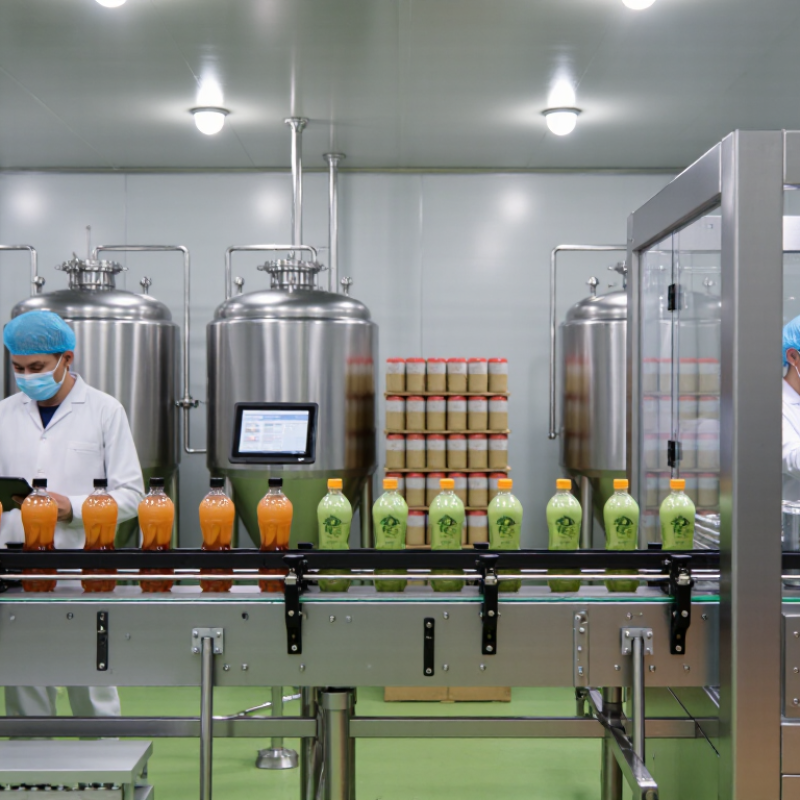
In supplier audits, production consistency matters more than impressive machinery. Buyers should review water treatment records, ingredient certificates, batch coding, and sanitation procedures. Reliable facilities usually provide traceability from raw materials to finished cartons. Automated filling lines can reduce handling risks, but they do not replace trained quality teams. Small details matter, such as clean pipe joints and accurate temperature logs.
China also supports export markets through ports, packaging producers, testing laboratories, and logistics providers. This connected structure can shorten development cycles and reduce procurement complexity. Yet the industry is not perfectly uniform. Some suppliers communicate clearly before an order but respond slowly after production begins. Others offer attractive prices while underestimating inspection, documentation, or transport costs. Global buyers need written specifications, independent testing, and realistic lead times. Factory visits remain useful, especially when product quality depends on storage conditions or production hygiene. A low quotation is not always a low total cost.
China’s Soft-Drink Production and Global Manufacturing Role
China’s soft-drink production increased from approximately 177.6 million tonnes in 2019 to 188.9 million tonnes in 2023. This sustained production scale highlights China’s importance as a beverage manufacturing base for domestic consumption, contract manufacturing, packaging, and international supply chains.
Source: National Bureau of Statistics of China and China Beverage Industry Association; figures are rounded annual soft-drink production estimates.
Key Types of Beverage Suppliers in China
China’s beverage suppliers serve different purchasing needs, and their capabilities can vary widely. Contract manufacturers produce finished drinks from an approved formula, packaging design, and production schedule. They often support filling, labeling, quality checks, and export preparation. This suits buyers seeking a ready-to-sell product without building a factory.
OEM and ODM suppliers offer more flexibility. OEM partners follow a buyer’s formula and specifications. ODM suppliers provide existing recipes that can be adjusted for flavor, sweetness, ingredients, or package size. Ingredient suppliers form another important category. They provide concentrates, fruit preparations, functional ingredients, and technical documents. Buyers should request certificates of analysis, batch traceability, and stability data before making decisions.
Equipment and packaging suppliers support the production chain from another angle. They may provide filling lines, bottles, cans, caps, cartons, or flexible pouches. Trading companies can connect overseas buyers with several factories, but their technical control may be limited. A factory visit is useful, yet it cannot replace independent testing or a documented quality system. The categories are not always clean. Some suppliers outsource key processes, which can create hidden risks. Ask who owns the formula, where testing occurs, and how rejected batches are handled. A small pilot order often reveals more than a polished presentation. Shelf-life checks, sample approval, and clear production records remain practical safeguards for global buyers.
Production, Quality Control, and Certification Standards
For global buyers, a capable Chinese beverage supplier must show more than modern equipment. Production discipline begins with approved raw materials, tested water, and controlled blending records. Operators should verify syrup weight, acidity, temperature, and filling volume at defined intervals. Clean-in-place systems need documented cycles, not only polished pipes. A useful factory visit follows the line from receiving dock to finished-goods storage. Look for sealed ingredients, clear allergen separation, and batch codes that remain readable after chilling. Small details matter.
Quality control should combine laboratory testing with floor-level checks. Samples may be examined for microbiological safety, pH, brix, appearance, and package integrity. Metal detection, leak testing, and cap-torque checks reduce practical risks during shipping. Retained samples help investigators compare a complaint with the original batch. Suppliers should explain corrective actions, not simply present favorable results. Ask who releases a lot, which instrument is calibrated, and what happens after a failed test. These questions reveal real experience.
Certification can support trust, but certificates are not magic. Relevant systems may include HACCP, ISO 22000, GMP, or destination-specific approvals. Verify the certificate scope, site address, expiration date, and audited processes. A certificate for storage does not automatically prove safe beverage production. Export documents should match the actual formula, packaging, and market requirements. No factory is flawless. I have seen strong plants lose control when production changes too quickly. Buyers should request recent audit findings and improvement records. Honest gaps, clearly managed, are safer than perfect-looking paperwork.
Export Services, Costs, and Supplier Selection Criteria
For global beverage buyers, supplier selection should begin with export capability, not catalogue size. China remains a major manufacturing base, supported by broad packaging and processing capacity. UN Comtrade data shows China is among the world’s leading exporters of processed food and beverage-related products. However, export experience varies sharply between factories.
Ask for recent shipment records, production licenses, laboratory reports, and traceability procedures. Confirm whether the supplier manages customs documents, certificates of origin, health certificates, and destination-specific labeling. The World Bank’s 2023 Logistics Performance Index highlights customs, infrastructure, tracking, and delivery timeliness as core trade factors. These details affect real delivery performance. Not just quotations.
Calculate landed cost carefully. Include product price, bottles, cartons, tooling, inspection, inland transport, freight, insurance, duties, and port charges. A low factory price can become expensive after packaging changes and shipping delays. Request pricing under clear Incoterms, such as FOB or CIF, and confirm minimum order quantities. Payment terms also matter. Cash flow is often overlooked.
Independent testing should verify ingredients, shelf life, microbiological safety, and packaging migration limits. ISO 22000-based systems can indicate stronger food-safety controls, but certification alone proves little without current audit evidence. The FAO estimates that 13.2% of food is lost before retail globally, reinforcing the need for reliable storage and transport planning. I would also inspect the factory remotely or in person. Photos can hide inconvenient facts. A pilot order is safer than trusting a polished presentation.